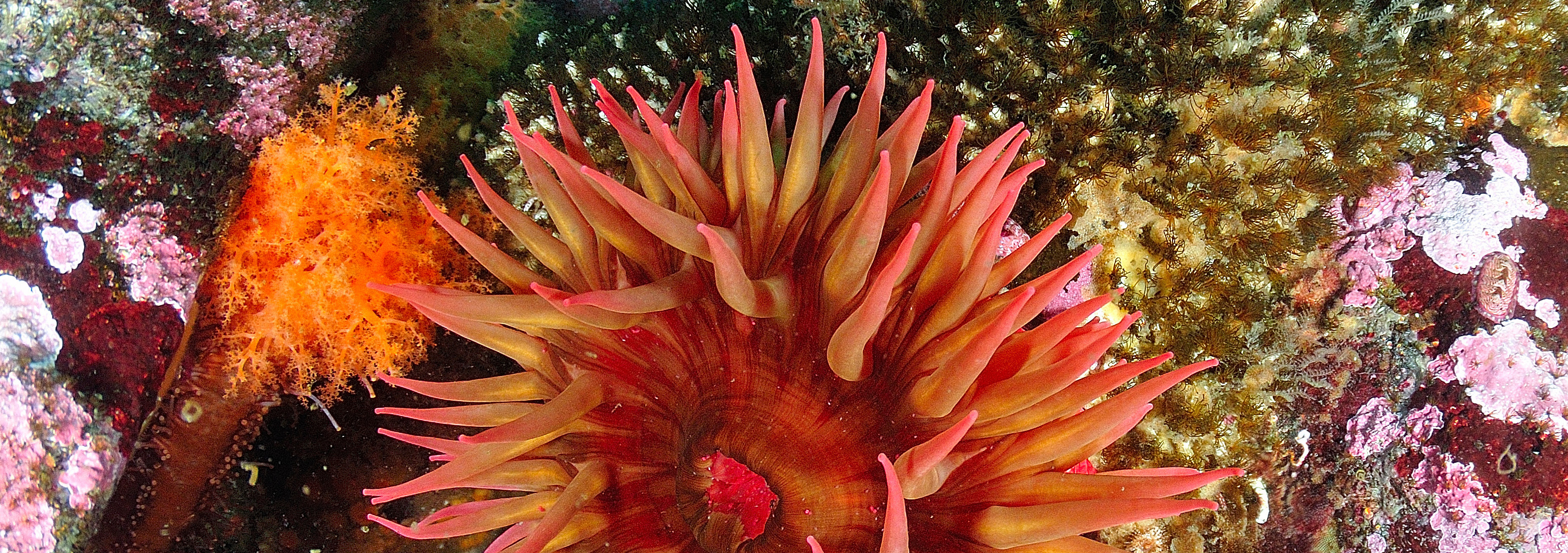
Last month, more than 1100 scientists and researchers converged on Vancouver, B.C. to attend the Salish Sea Ecosystem Conference. The biennial conference is the region’s largest gathering on the state of the ecosystem, and we sent a group of reporters to bring back some of the highlights. Over the next several months, we’ll be collecting those highlights into […]
May 5, 2016

Paper looks at social–ecological approaches to herring management
A new paper co-authored by PSI’s Tessa Francis connects social and ecological factors influencing herring management in the Salish Sea. The paper, published in the journal Ecosystem Health and Sustainability, grew out of a three-day workshop held last year in British Columbia. The workshop was sponsored by The Ocean Modeling Forum, a collaboration between the School of Aquatic […]
April 22, 2016
PSI armoring report featured on KUOW
KUOW interviewed PSI’s Aimee Kinney today about the impacts of shoreline armoring on the Puget Sound ecosystem. Kinney was the lead author of an analysis report of recent nearshore studies funded by the Washington Department of Fish and Wildlife. New studies reveal that shoreline armoring degrades beach ecology and hurts Puget Sound species like forage fish and salmon. […]
April 12, 2016
Gearing up for the 2016 Salish Sea Ecosystem Conference
Watch for updates and stories from the 2016 Salish Sea Ecosystem Conference in the Encyclopedia of Puget Sound this week. We are sending ten science writers to Vancouver to cover important findings from the conference that will be published throughout the year as part of our Salish Sea Currents series. If you want a sense of what […]
April 8, 2016
Sources of sand: maps show crucial ‘feeder bluffs’
For more than a hundred years, property owners have seen shoreline erosion as the enemy. They have battled it with startling amounts of concrete and have lashed together so many protective beach structures that about a third of Puget Sound’s shoreline is now classified as armored. It’s a fitting term for this longstanding battle against […]
March 29, 2016
Studies show high amounts of illegal shoreline armoring
Our series on shoreline armoring continues today with two new stories. Studies show that a significant number of shoreline structures are being built illegally without required permits. We also report on efforts to educate shoreline property owners about alternatives to environmentally-damaging concrete bulkheads. Read these stories and others from the series in the Encyclopedia of […]
March 22, 2016
Series looks at shoreline armoring
Our online magazine Salish Sea Currents launches a six-story series today focusing on shoreline armoring in the Puget Sound region. Close to a third of Puget Sound’s shoreline is classified as armored with bulkheads and other structures meant to hold back storm surge and erosion. But new studies reveal the often significant toll this is taking […]
March 1, 2016
Puget Sound Day on the Hill 2016
Local agencies and stakeholders—including PSI— were in D.C. today to advocate for Puget Sound. Follow some of the action on social media, including Twitter posts at #saveoursound and #saveamericassound. Among the day’s highlights was a new stormwater bill introduced by Representative Derek Kilmer, who announced the legislation on Facebook. Read the full text of H.R.4648 – […]
February 29, 2016
PSI in the news: Identifying pharmaceuticals in Puget Sound salmon
KUOW’s Bill Radke spoke with PSI director Joel Baker about a recent NOAA study identifying dozens of pharmaceuticals—from Prozac to Valium to bug spray—that are showing up in Puget Sound salmon. Listen to the interview.
February 25, 2016
Herring fishery’s strength is in the sum of its parts, study finds
The online publication UW Today reports on a recent paper co-authored by PSI research scientist Tessa Francis. The paper, published in the journal Ocealogia, describes how individual herring populations in Puget Sound exhibit a portfolio effect, collectively influencing and stabilizing the region’s population as a whole. Francis teamed up with the paper’s lead author UW doctoral student Margaret […]