Introduction
This page provides descriptions and links to current and past PSI projects that advanced knowledge on fecal pollution or sewage treatment within Puget Sound.
Washington state is the largest producer and exporter of shellfish in the United States[1]. Shellfish include bivalves such as oysters, mussels, clams, and geoducks. These animals serve not only as an essential economic products but also hold high historical and cultural value for the region[2]; provide critical ecological services such as creating foraging habitats for fish and crabs[3]; and remove excess nutrients, like nitrogen, from nearshore waters[4]. An adult oyster can filter up to 50 gallons of water per day. A 2017 analysis by the Woods Hole Sea Grant Program and Cape Cod Cooperative Extension found that, on average, an adult oyster contains about 0.28 grams of nitrogen when sampled.
In addition to filtering nutrients, shellfish unintentionally absorb toxins and other pollutants in nearshore waters, including harmful pathogens such as fecal coliform. This bacteria originates from human and animal waste discharged through farms, boats, and malfunctioning septic systems. The Washington State Department of Health (DOH) is responsible for ensuring the safe consumption of shellfish from Puget Sound. DOH helps counties with nearshore monitoring sampling and can close beaches and shellfish beds when unsafe levels of pathogens are found.
Researchers at the Puget Sound Institute support the DOH Shellfish Strategic Initiative Lead (Shellfish SIL) and the Department of Ecology Stormwater SIL. The Shellfish and Stormwater SILs are partner programs under the EPA National Estuary Program.
Projects
Small-scale wastewater treatment systems study (in progress)
In 2026, PSI received funding from the Stormwater SIL to conduct a Small-Scale Wastewater Treatment Systems Study. This study is examining how small-scale community wastewater systems could alleviate challenges arising from the region’s aging septic systems. PSI will identify potentially suitable locations for alternative systems, like Large Onsite Sewage Systems or Community Drainfields, and potential implementation barriers.
Throughout the project, PSI will:
- Identify regulatory limiting factors for individual replacements and alternative systems.
- Conduct a spatial analysis to identify areas potentially suitable for alternative systems.
- Conduct a comparative analysis of treatment options to understand relative costs and benefits, and highlight important planning considerations.
Project end-date: December 2027
Learn more about the project here:
Factsheet: Small-Scale Wastewater Treatment Systems Study (pdf)
Analysis on individual and community septic systems
In December 2025, PSI conducted a case study analysis on three Washington communities that shifted from individual onsite sewage systems (OSS), commonly called septics, to alternative community septic infrastructure like a Community Drainfield or Large Onsite Sewage System (LOSS). In Washington state, many OSS are aging and need replacement; however, small parcel sizes make replacing individual OSS challenging due to updated state-required minimum drainfield sizes.
This study aimed to analyze the tradeoffs and factors involved in using community septic infrastructure, which removes the need for drainfields on individual parcels. The study highlights the challenges and lessons learned from communities that have experienced this transition. One goal of this effort was to close the knowledge gap between local practitioners working directly on OSS transition projects and state planners and agencies that may want to promote the use of Community Drainfields or LOSS to address the aging OSS issue. The case studies focused on three Washington communities: Fall City in King County, Packwood in Lewis County, and Maple Grove in Island County.
The report concluded with reflections derived from a comprehensive review of the three case studies, drawing on key discussion points from practitioners. Reflections from the case study were:
The willingness to use enforcement actions like denying building permits can be one of the most effective ways to drive wastewater transitions.
Identifying priority geographies that are well-suited for wastewater transitions can allow for proactive support for those communities through education and permitting coordination.
Supporting local champions with funding, training, and/or technical assistance can help build and sustain buy-in for wastewater transitions.
Clarifying community values early helps keep the focus on workable solutions.
Finding a viable drainfield is often the greatest challenge—success depends on patience, flexibility, and creative partnerships.
Access to diverse funding sources—and the staff and political support to secure it—is essential to upgrade wastewater treatment infrastructure.
Even the best-designed and funded wastewater solutions depend on individual property owners’ willingness to participate.
Learn more about the project here:
Case Study Booklet: Executive Summary: Beyond the Backyard Septic
Types of septic infrastructure around Puget Sound

Onsite Sewage System
OSS are the most common type of rural wastewater treatment. OSS treat less than 3,500 gallons per day. These systems are usually used for individual properties and consist of a septic tank, a short conveyance pipe, and a drainfield. Local Health Jurisdictions act as the implementing agency.
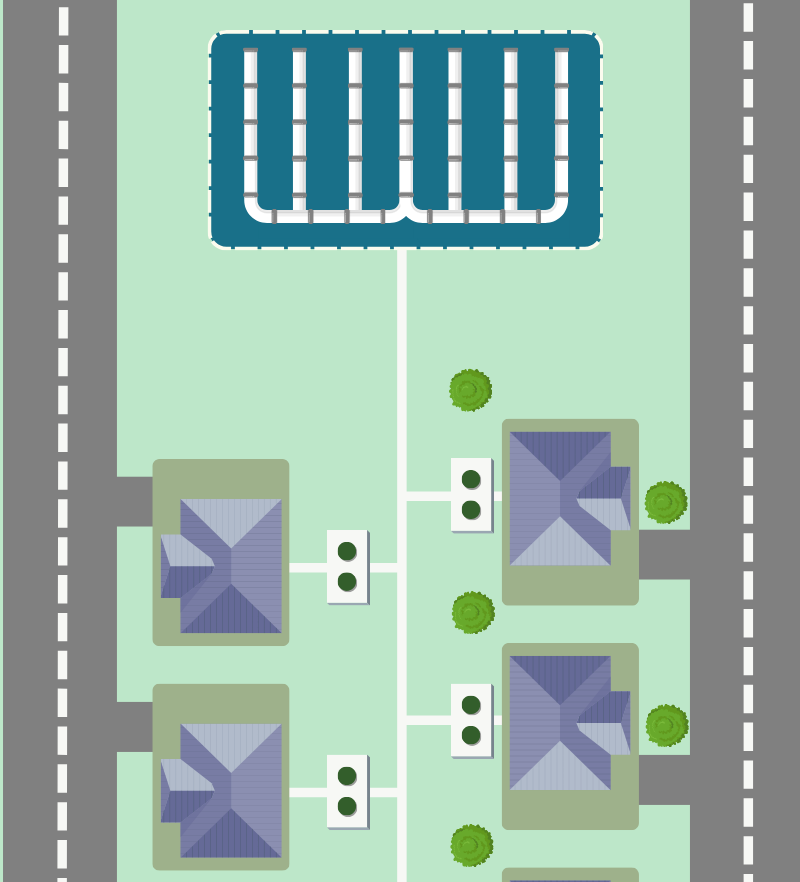
Community Drainfield
Community Drainfields connect multiple homes to a single drainfield. A Community Drainfield treats less than 3,500 gallons per day. A typical setup includes individual tanks on properties that pump to a shared conveyance line, which then leads to a shared drainfield. The county Local Health Jurisdiction acts as the implementing agency.
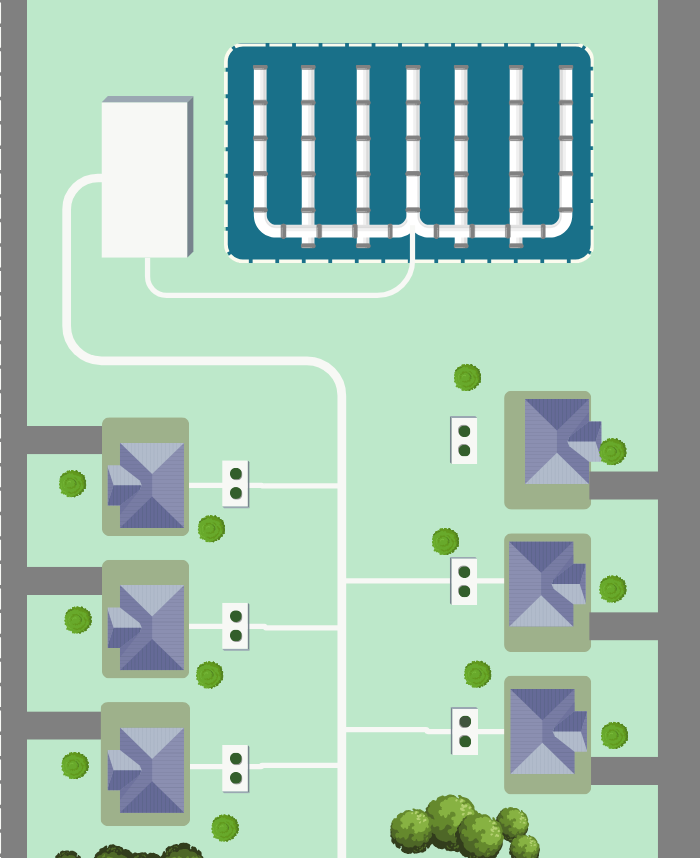
Large Onsite Sewage System
A LOSS is the largest type of septic system, serving communities ranging from small to large through a shared drainfield. A LOSS treats between 3,500 and 100,000 gallons per day. The system includes individual or shared septic tanks on or near properties, conveyance lines, a secondary treatment system, and the shared drainfield. DOH acts as the implementing agency.
Fecal pollution uncertainties
The Shellfish Beds Implementation Strategy (IS), led by the Shellfish SIL, is a plan to restore and protect shellfish growing areas in Puget Sound by reducing pathogen pollution, especially fecal pollution, with the goal of increasing harvestable acreage. Throughout 2024, PSI collaborated with the Shellfish SIL to update their research agenda, which is a list of known knowledge gaps or “uncertainties” that, when studied, will support the Shellfish Beds IS’s objectives.
This process, further detailed on our ‘Co-developing a research agenda for Puget Sound‘ page, resulted in a list of 45 fecal-related uncertainties ranked from Low to Top priority. PSI, with support from regional research experts and Shellfish SIL, identified three top uncertainties related to reducing fecal pollution in Puget Sound.
- Where can aging OSS that cannot be repaired or reinstalled be replaced with alternative septic systems (Large OSS or wastewater treatment plants)?
- What’s the range of potential costs to a) property owners and b) the government to relocate septic systems at risk from sea level rise vs. inaction?
- What elements of agriculture incentives from different counties are most effective at reducing fecal bacteria contamination? and what additional barriers could be addressed through incentives?
Read more about PSI’s update to Shellfish Beds research agenda update through the resources below
Learn more about the project here:
Research Agenda Memo: Developing a Research Agenda for the Shellfish Beds Implementation Strategy
Factsheet: Shellfish Research Agenda
Microbial source tracking
Microbial Source Tracking (MST) is a technique used to determine the origin of fecal contamination by examining water samples for specific markers from human and animal waste. MST assists communities in protecting public health, restoring shellfish beds, and identifying pollution sources.
PSI convened regional and national experts to advance MST methods and share tools for protecting water quality in the Salish Sea. The September 12, 2025 virtual workshop featured regional and national experts sharing best practices, research, and emerging tools. The presentations covered MST study design and lessons learned, advances in distinguishing human fecal sources, and new in-situ, autonomous water quality monitoring technology. The workshop concluded with lightning talks from Salish Sea practitioners highlighting ongoing local and regional MST applications in British Columbia, Skagit County, and King County.
Resources shared during the presentations included:
- Link to the Virridy website
- An EPA report on Nooksack Water Quality Monitoring Results
- A 2022 study that used fluorescence sensors with a machine learning model to detect fecal pollution in drinking water
- A 2022 study that used a targeted approach to identify the crAssphage virus in surface and groundwater
- Link to the EPA National Water Quality Monitoring Council
Watch the full workshop recording below.