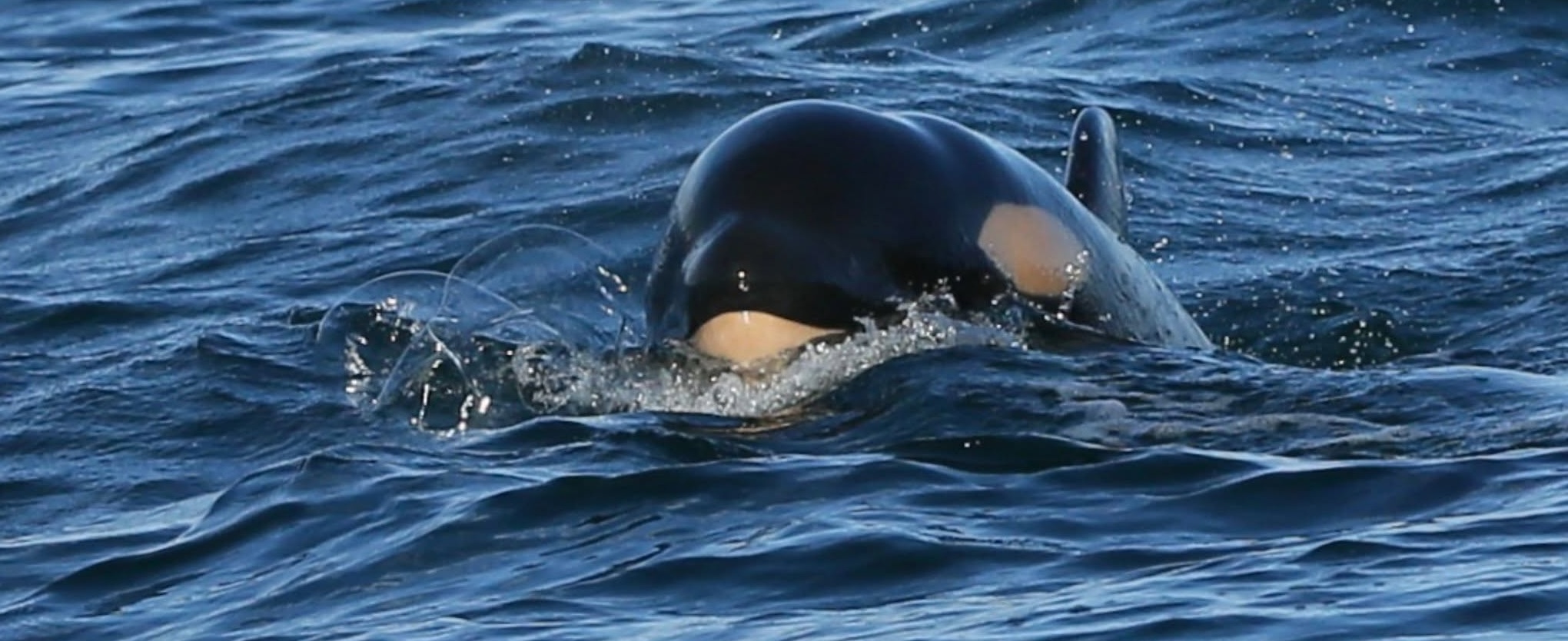
The southern resident killer whales — those fish-eating orcas that were once tied closely to Puget Sound — have managed to stay somewhat intact, with no deaths among the adult population for more than two years.
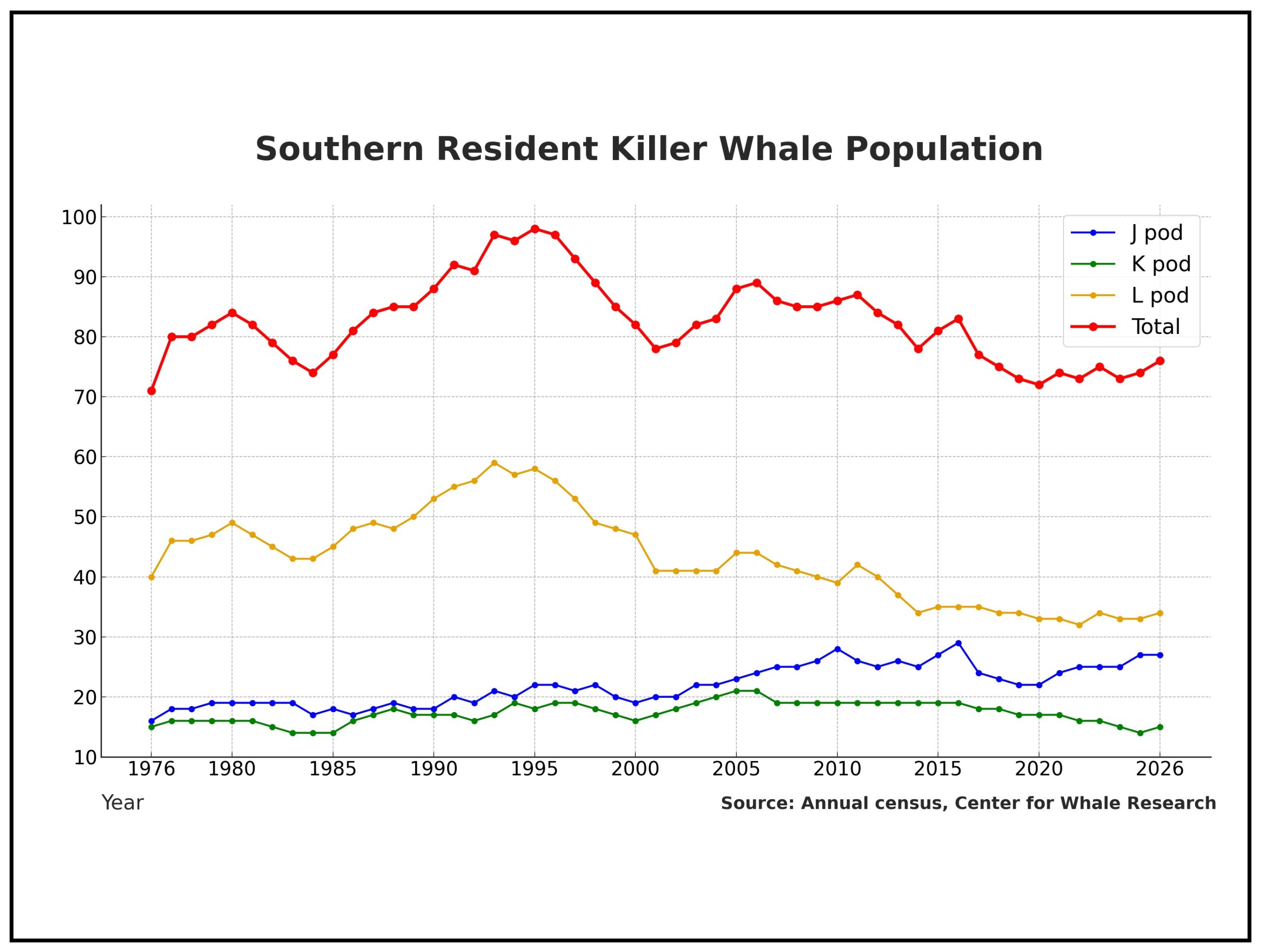
As I reported this summer, four new calves were reported during the recent census year, ending in July, but only two of them have survived. That raises the official population count to 76 whales in 2026, as reported by the Center for Whale Research in its annual census report. If this rate of population growth could be sustained, the endangered orcas might be on a path to recovery. But, given their history, that remains just a hope.
About this time each year, the southern residents spend some time catching chum salmon, which are now on the move into Puget Sound. As of today, I am not sure where the whales are, and there are no confirmed sightings since Oct. 3. I will include a mention here when the whales move into Central Puget Sound. During September, several sightings were reported around the San Juan Islands with at least one excursion south of Whidbey Island.
Deceased newborn and population trends
The sad news of a dead newborn in J pod, reported last week, will not affect the census count for next year, because the baby was never seen alive and did not get an alfa-numeric designation. Whale researcher Mark Malleson with CWR spotted the dead calf being carried by J31, a 31-year-old female named Tsuchi, who has experienced a history of reproductive failures.
Tsuchi was seen with her dead baby near Sombrio Point in the Strait of Juan de Fuca. That’s southeast of Vancouver Island’s Point Renfrew, inside the opening to the Pacific Ocean. It isn’t clear whether the baby was carried to term or was stillborn, according to CWR’s report on Facebook. The practice of a mother holding onto a dead infant, sometimes for days on end, has been interpreted as part of the mourning process.
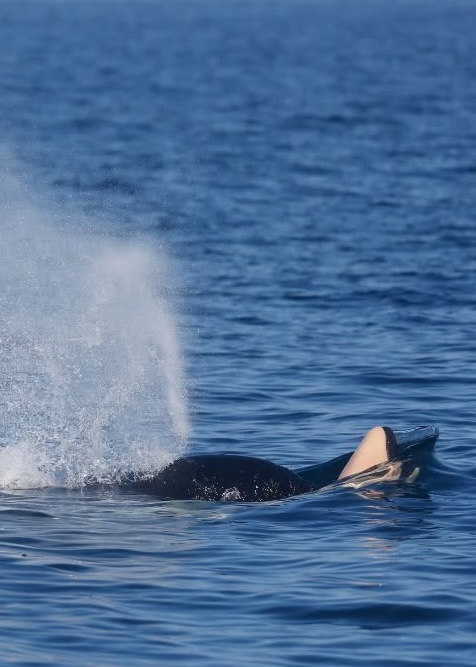
In 2016, Tsuchi was seen carrying a dead calf near Edmonds. Three years later, she had a daughter, her only surviving offspring, a 6-year-old female named Tofino. Until the birth of Tofino, all of J pod had gone three years without a successful birth, so it was a notable event. Since then, J pod has seen eight calves, although three of those have died.
The ongoing struggle to build a healthy population among the southern residents involves adult orcas dying before their time as well as a high rate of miscarriages and infant mortality. Although many factors come into play — including toxic chemicals and potential inbreeding — the biggest problem appears to be a lack of plentiful Chinook salmon, their primary prey, according to Michael Weiss, research director for the Center for Whale Research.
“And it’s not just abundant food, but large food items,” Michael told me. “They need more Chinook but also Chinook of sufficient size.”
It is a matter of energy balance, because the whales must exert themselves to catch fish. If the fish they catch are large, the payback can be enough to keep them healthy. But if the fish are small, the whales need to catch more of them. They may face an energy deficit, accompanied by an increased health risk to the entire population.
While the number of salmon among the various stocks, or populations, are commonly reported by fisheries experts, the size of the fish may deserve more attention, Michael said.
As suggested by studies, a healthy food supply may induce more pregnancies, but the nutrition level must be maintained year after year for long-term success — first, a healthy birth; then a supply of mother’s milk for up to three years; and eventually enough fish for the growing calf.
“You don’t need just one big peak year (of food),” Michael said, noting that the so-called “baby boom” from December 2014 to January 2016 resulted in nine births, but only five survived beyond four years.
A 2017 study by University of Washington researcher Sam Wasser was able to link stress hormones to nutritional deficits and failed pregnancies during those years, but there are still some questions about the exact causes of death among the young calves.
Chum salmon run
When the availability of Chinook salmon decline in the late summer and fall, the southern residents often head south into Puget Sound to take advantage of more plentiful chum salmon returning to streams throughout the region.
So far this year, the whales have not arrived, but the year’s first test fishery near Kingston last week showed more chum coming in at the start of the run into Central Puget Sound than anytime since 2001, according to Mickey Agha, salmon policy analyst for the Washington Department of Fish and Wildlife.
Those early numbers must not be taken as a clear indication of how many total chum will come into Puget Sound this fall, since the fish may simply be bunched together during their arrival, as opposed to being spread out over an extended period. But it does suggest that the whales will have something to eat when they arrive.
Last year, J pod — the one most closely affiliated with Puget Sound — began testing the water for fish in mid-September and made a notable excursion south of the Tacoma Narrow Bridge in advance of the large chum arrival. All three pods showed up in late October as the chum runs were building. See Our Water Ways, Oct. 27, 2025, for a reminder of what happened last year. We now know that the chum runs in Central and South Puget Sound fell off toward the end, with the total falling short of the final in-season estimate of 950,000 fish.
This year, any delays with the southern residents coming into Puget Sound could be related to a stronger-than-normal chum run returning to the Fraser River in Canada. The whales can catch those fish in the Strait of Juan de Fuca and in the San Juan Islands, but also in the Strait of Georgia closer to Vancouver, B.C.
The timing of salmon returns to Puget Sound, with the whales close behind, often relates to rainfall. Heavy fall rains push nutrient-rich freshwater into Puget Sound, the smell of which seem to spur on the movement of salmon heading back to their natal streams. Once begun, the salmon will keep moving upstream to spawn, provided an adequate streamflow.
Latest from J, K and L pods
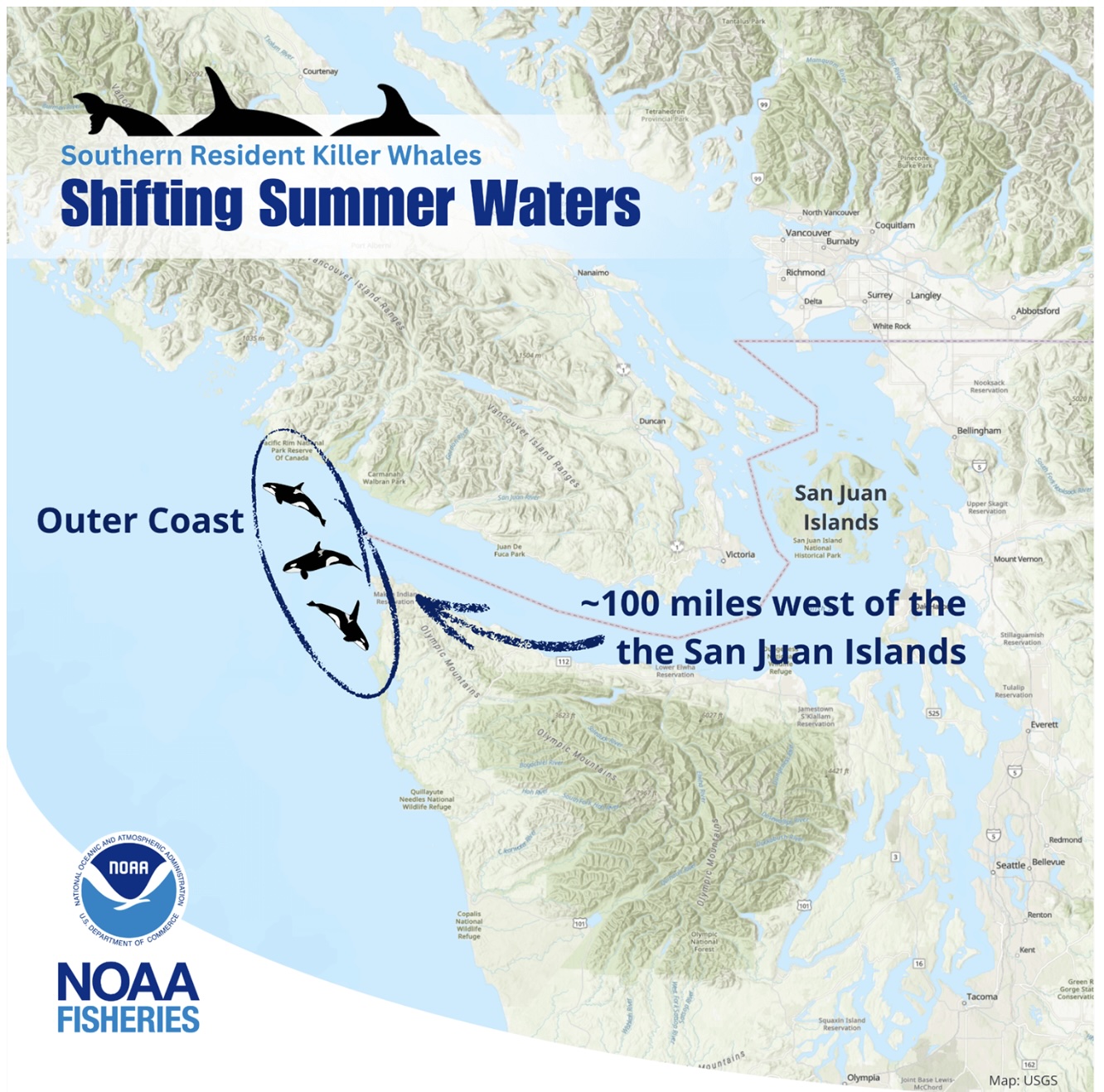
With continued weakness in the Fraser River Chinook runs, the three southern resident pods didn’t spend much time around the San Juan Islands, their historical hunting grounds during the summer. Instead, the whales seemed to be finding adequate food in the rich feeding grounds of Swiftsure Bank near the entrance to the Strait of Juan de Fuca. This shift toward the ocean was studied by NOAA scientists, as reported in NOAA News.
“They found enough food out there this year,” Michael said, noting that the whales overall appear to be in pretty good condition. “They were able to get enough food to stay alive and even have successful births.”
Swiftsure Bank is like Grand Central Station for many salmon stocks, some heading toward the mighty Columbia River, some heading into Canada’s Georgia Strait, and some moving south into Puget Sound.
A summary of the three pods from the latest census report:
J pod: “J pod continued to be our most encountered social group and has maintained a social cohesion as a single unit in 2026,” the report states.
A new calf was born in September 2025 to J42, a 19-year-old female named Echo. The calf, designated J64, went missing about a month later, so it is recorded as both a birth and a death. With no other births or deaths, J pod remains at 27 individuals for the census.
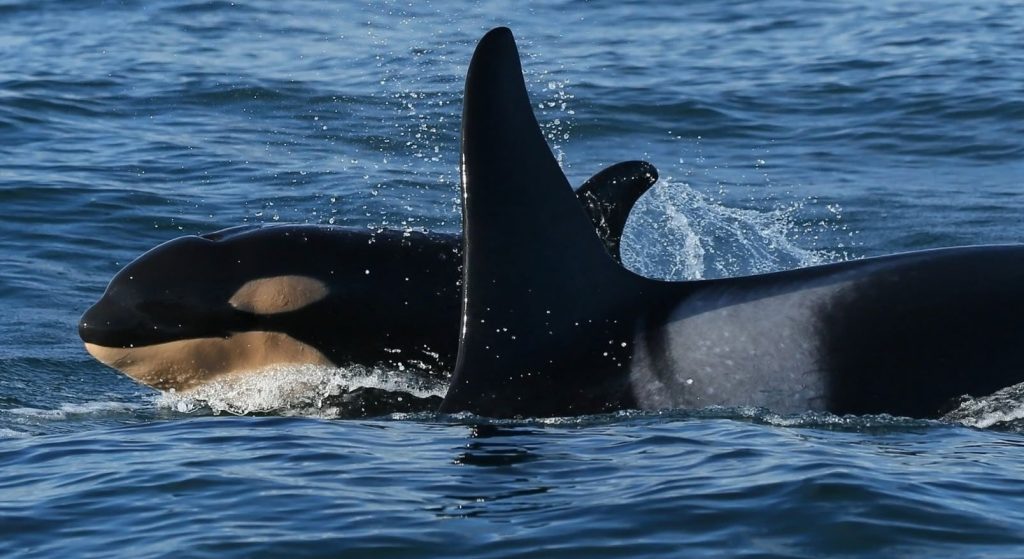
K pod: The smallest of the three pods, K pod has been a single cohesive unit since the death of K21, a male named Cappuccino who died five years ago at age 35. Until then, Cappuccino was the only survivor of a loosely independent group that became associated with K16 (Opus) and her son K35 (Sonata). Those two now travel mainly with the rest of K pod.
The 2026 census includes the first recorded birth in K pod since 2022. The baby is a female designated K47, born to K43, a 16-year-old named Saturna. No deaths were noted during the census period, so the official count increases by one, to 15 individuals. This is the first time in 21 years that K pod’s census count has increased.
L pod: The largest and least cohesive of the three southern resident pods, L pod has been split into two main groups in recent years. One group, known as the “greater L4s,” is named for the matriarch L4, a female who died in 1996 at about age 50. The greater L4 group now includes L4’s two daughters and eight grandchildren plus another individual. The second group of traveling companions include the L12 subgroup, with multiple matrilines and individuals, along with the L54 subgroup, which includes L54 (Ino), her two sons and a male from another family.
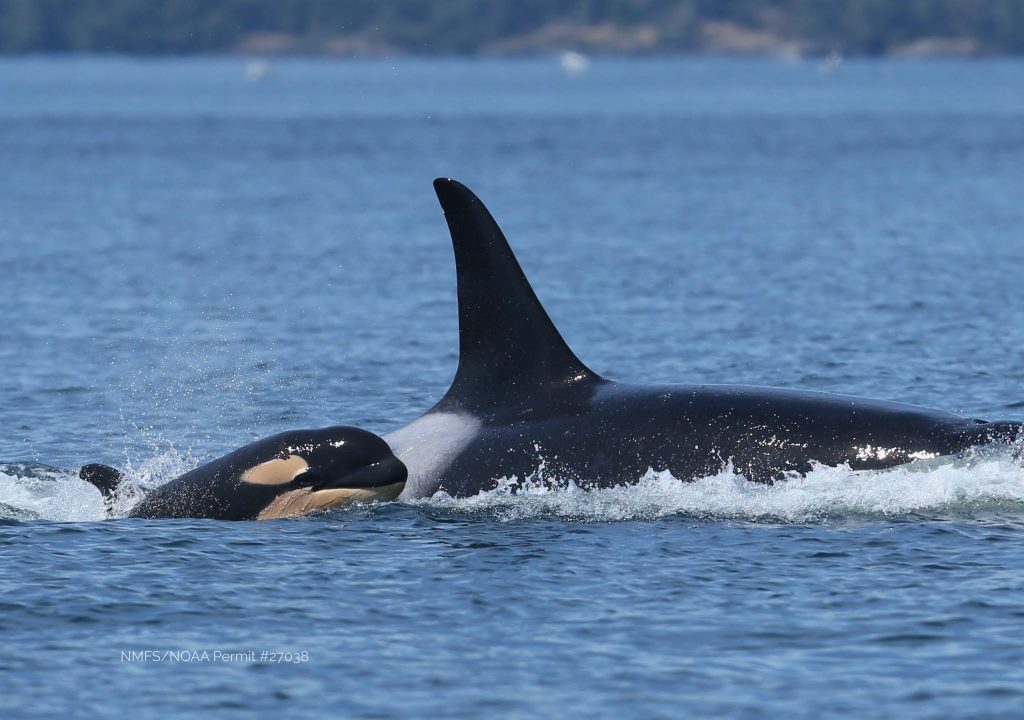
Two new calves were born in L pod during the census year. L129 was seen during a single encounter and died before its mother could be identified — although L55 or L103 are the most likely candidates, according to the report. The other calf, L130, was born in December to L91, a 31-year-old female named Muncher. L pod increased by one, to 34 whales in the latest census.
Health concerns: A 3-year-old male, L-126 named Ken, continues to look small for his age and appears in poor condition, according to the census report, although some improvement was noted in July and August of this year. Researchers also are concerned about his behavior, as he appears socially isolated, often swimming away from other whales, even his mother. The mom is L119, a 14-year-old named Joy.
“In at least two cases, we observed him apparently having difficulty keeping up with other whales during fast travel and high-energy social behavior, with his mother periodically doubling back to re-associate with him,” the report states. “This is an ongoing health concern, and we will continue to monitor L126’s health when possible.”
Tool-making among orcas
After years of study, killer whale researchers have learned that our southern resident orcas fashion “tools” from bull kelp and use them to groom each other. These new findings are the result of advanced drone technology capable of capturing high-resolution images of intimate whale behavior.
Following last year’s report in the journal Current Biology, researchers are continuing to observe these “allokelping” activities to learn about the social and health implications of the practice that has no doubt been going on for a long time, Michael Weiss told me.
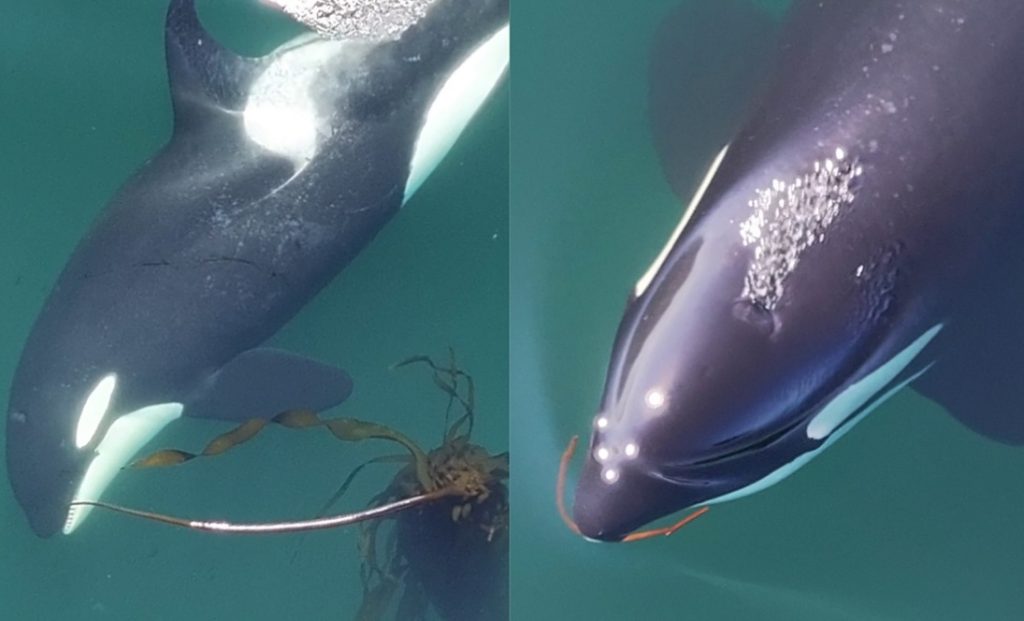
On numerous occasions, the whales were seen to break off the ends of kelp stalks and press them against another whale, rolling the kelp between their bodies. The behavior was seen in all age groups and among both sexes, although it seems that the orcas were more likely to groom relatives or whales of similar age.
The practice may have social benefits in forming stronger bonds, assuming the recipient of the touch gets a pleasurable feeling, Michael said. Primates are known to groom each other to remove parasites, and there have been reports of chimpanzees stripping leaves off twigs and using the stick for cleaning each other’s teeth.
“We’re really interested in seeing if there is a health benefit,” Michael said, noting that removing dead skin and accumulated fungus could be beneficial. “We are now seeing it on almost every encounter.”
There is some evidence that whales with a larger amount dead skin seemed more interested in the grooming activities.
Northern resident killer whales are known to visit their shallow, pebbly “rubbing beaches” in Robson Bight on Northeastern Vancouver Island in Johnstone Strait. Whether kelp serves a similar social or health function is one question to be answered, along with finding other orca populations using kelp or other tools.
Historically, kelp was more plentiful in Puget Sound, and kelp forests are still considered a central component of of a highly productive ecosystem. Helping killer whales might be one more reason to protect and restore kelp.
Michael points out that it is rather remarkable that this behavior was only recently discovered, despite more than 50 years of carefully observing the southern resident population. This goes to show that new technology may be capable of helping us understand many more things that we don’t know about these orcas, he said.
The Center for Whale Research is teaming up with other organizations to form a working group of researchers to further study how the whales use kelp along with other lesser-known behaviors.
No Comments yet!