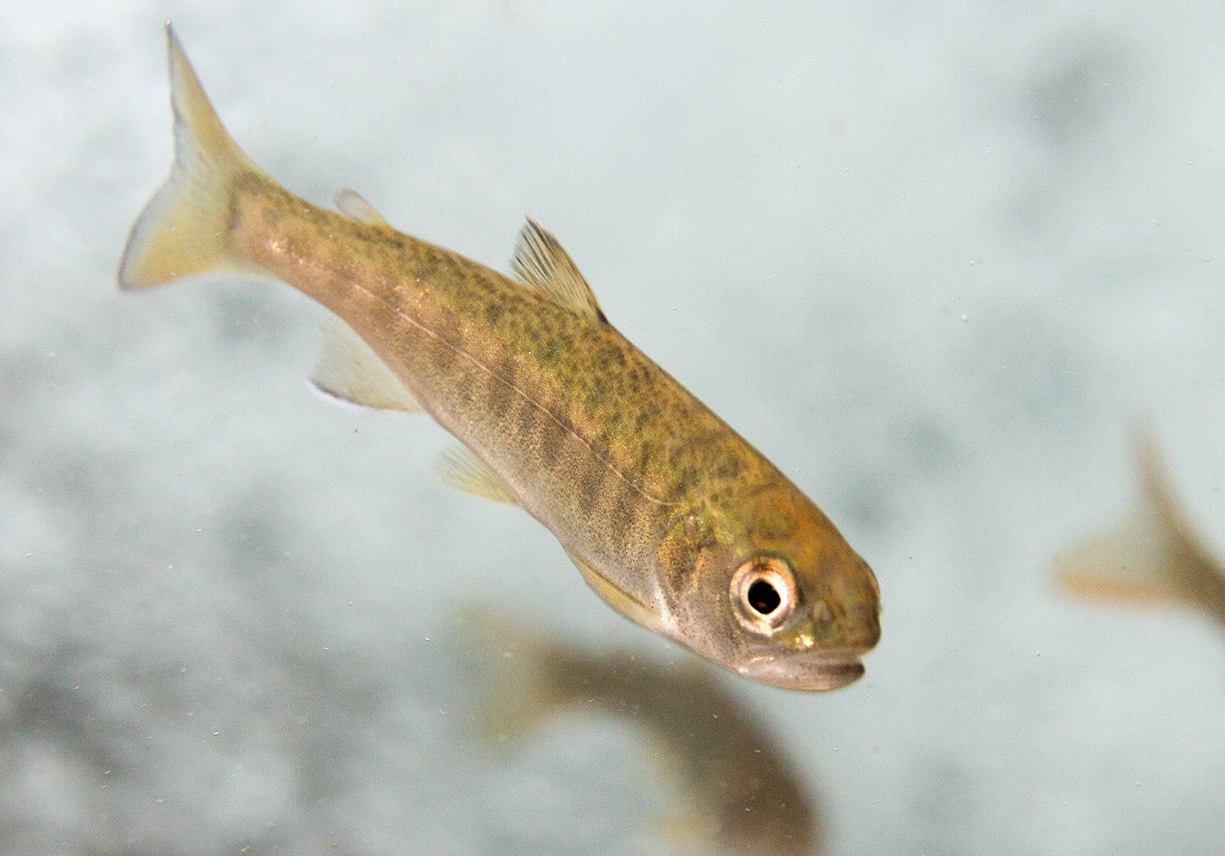
Untold numbers of hatchery fish may be dying from exposure to tire-contaminated runoff, according to a new study.
When it was first identified in 2020, the deadly tire chemical 6PPD-quinone (6PPDQ) was seen mostly as a threat to adult coho salmon. Fish returning in the fall were found disoriented and gasping shortly after entering creeks that had even trace amounts of the chemical. In some cases, as many as 90 percent of those fish died before they could spawn, a problem that continues to threaten some local populations with extinction.
For the first time, a new study reveals that 6PPDQ may be just as harmful to juvenile coho as adults. The findings suggest a year-round hazard for already stressed wild populations and raises big questions about the viability of coho coming out of hatcheries, where hundreds of thousands — perhaps millions — of fish may become poisoned and die before they can reach adulthood.
The paper, published this week in the journal Environmental Science & Technology, describes results from a study at Miller Creek, a small stream flowing into Puget Sound south of Seattle. Earlier laboratory results had shown that 6PPDQ was toxic to juvenile cohos, but this is the first time that scientists have been able to gauge the extent of the impact among juveniles in the wild.
“This allowed us to demonstrate that the streams receiving that runoff are absolutely killing juveniles,” said Jenifer McIntyre, director of the Aquatic Toxicology Lab at Washington State University, one of the paper’s co-authors and a leader of the study. Collaborators on the study included researchers at the University of Washington Center for Urban Waters, Washington State University, and the U.S. Geological Survey.
Scientists tested the fish over the course of three spring storms that carried runoff containing 6PPDQ into Miller Creek. Each time, about 80 percent of the fish exposed to the creek water died. Fish were placed in the water as it flowed, simulating the kind of conditions that coho would experience naturally in the stream.
“We were surprised that it was that consistent, but that was the outcome,” said McIntyre. “The fish were dying in about six hours.”
If those numbers are typical, the authors say, it could mean the early deaths of tens of thousands — or in some cases hundreds of thousands — of hatchery-raised coho in small creeks around Puget Sound each year. Citing Miller Creek as an example, the paper reports that “from 1981 to 2024, between 24,000 and 240,000 hatchery-spawned coho salmon fry were annually released to Miller Creek in early winter to aid in salmon conservation.”
The implications statewide would be much broader. “For context,” the authors wrote, “from 2019-2023, combined state, federal and tribal hatcheries released an average of 26 million coho salmon annually in Washington State alone.”
Wild coho would presumably also be hard hit in these same systems, but the studies have so far focused on hatchery fish which were more readily available for the study. Not all streams are as impacted by 6PPDQ as Miller Creek, the authors noted, but coho are often found in small streams where water quality is most impacted by roads.
“Miller Creek looks like other systems that are in the same land use area,” said McIntyre. “Miller Creek looks like Des Moines Creek looks like Fauntleroy Creek looks like Thornton Creek. So, we feel that Miller Creek is completely representative of these same types of streams, which coho favor.”
Now known as one of the deadliest chemicals ever found in an aquatic environment, 6PPDQ was first identified at the Center for Urban Waters at the University of Washington Tacoma. [The Puget Sound Institute is a Center for Urban Waters affiliate.] Scientists there discovered that 6PPDQ is a derivative of the tire preservative 6PPD, which becomes more deadly after exposure to ozone — a compound readily found in the roadway environment.
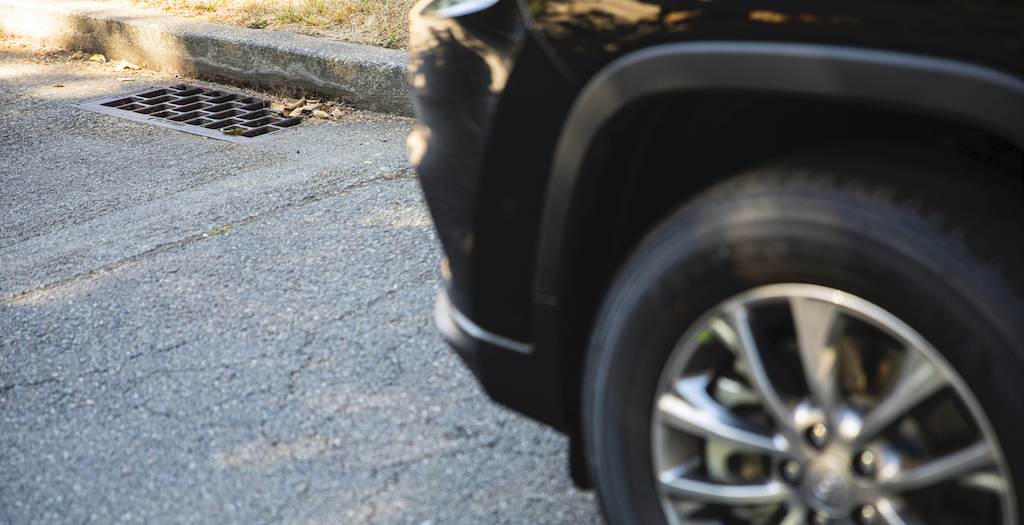
That work, based on earlier research by scientists at WSU, NOAA and other organizations, resulted in a landmark paper that has set off studies across the world. Coho are especially susceptible to 6PPDQ, but other species such as coastal cutthroat trout and steelhead are also considered vulnerable, and scientists continue to raise questions about impacts on other species including humans.
While early studies of 6PPDQ focused on spawning adult coho, some scientists began wondering immediately if juveniles were also affected. But understanding those impacts in the environment proved difficult, according to paper co-author Ed Kolodziej of the University of Washington, who led the team that first identified 6PPDQ.
Deaths of juvenile salmon in the field are notoriously hard to confirm. Coho do not float when they die, and they are naturally camouflaged, making them easy to get lost in the sediment and debris at the bottom of the creek. Plus, other animals eat them quickly.
“When they die, the water is high; it’s muddy,” said Kolodziej. “They get washed in the leaves and under logs. We had all these conversations — would we even know if you saw juveniles die?”
To get around this problem, the scientists set up a lab near the creek where fish from a nearby hatchery were exposed to creek water while control groups were exposed to uncontaminated water. Studies of “environmental” DNA collected from the water, called eDNA, also showed the presence of fish throughout the creek. The scientists say the next phase of their work will look at how resident fish, including wild coho, handle exposure to 6PPDQ.
In the meantime, the published study raises questions about current coho recovery efforts, including the management of hatchery fish, the authors say. Could hatcheries adjust the location and timing of their releases to minimize the impacts from 6PPDQ? Hatchery coho are often released in the spring, when waters are high due to spring rains. That is thought to help protect the fish from predators but is also a time when 6PPDQ is most prevalent in the creeks due to spring runoff.
“We think if they’re there and it rains, they’re potentially at risk,” Kolodziej said. “I think there’s a resource question around making sure water quality is suitable for hatchery augmentation efforts.”
Researchers have also looked at ways to filter and potentially minimize the amount of 6PPDQ entering streams, something especially critical for wild coho that reproduce there naturally.
Ultimately, scientists argue, the best approach is to find a replacement for 6PPD itself.
“We still have to deal with the water quality problem,” McIntyre said. “Our results help explain what is going on, but they don’t allow us to prevent the problem unless we are willing to do the hard work of making sure the chemical is not getting into the water.”
This year, legislation to ban 6PPD in Washington has been proposed, and tire companies are facing pressure in the form of lawsuits to find alternatives to the chemical, but those changes may not come quickly. Immediate questions remain about how to protect already imperiled coho stocks, including three populations in Washington, Oregon, and California listed as Threatened under the Endangered Species Act. As the paper shows, 6PPDQ exposure is a much more serious problem than previously identified, affecting potentially all life stages of this species.
Paper citation:
Related: Washington lawmakers to decide whether to ban a tire chemical shown to be toxic to salmon