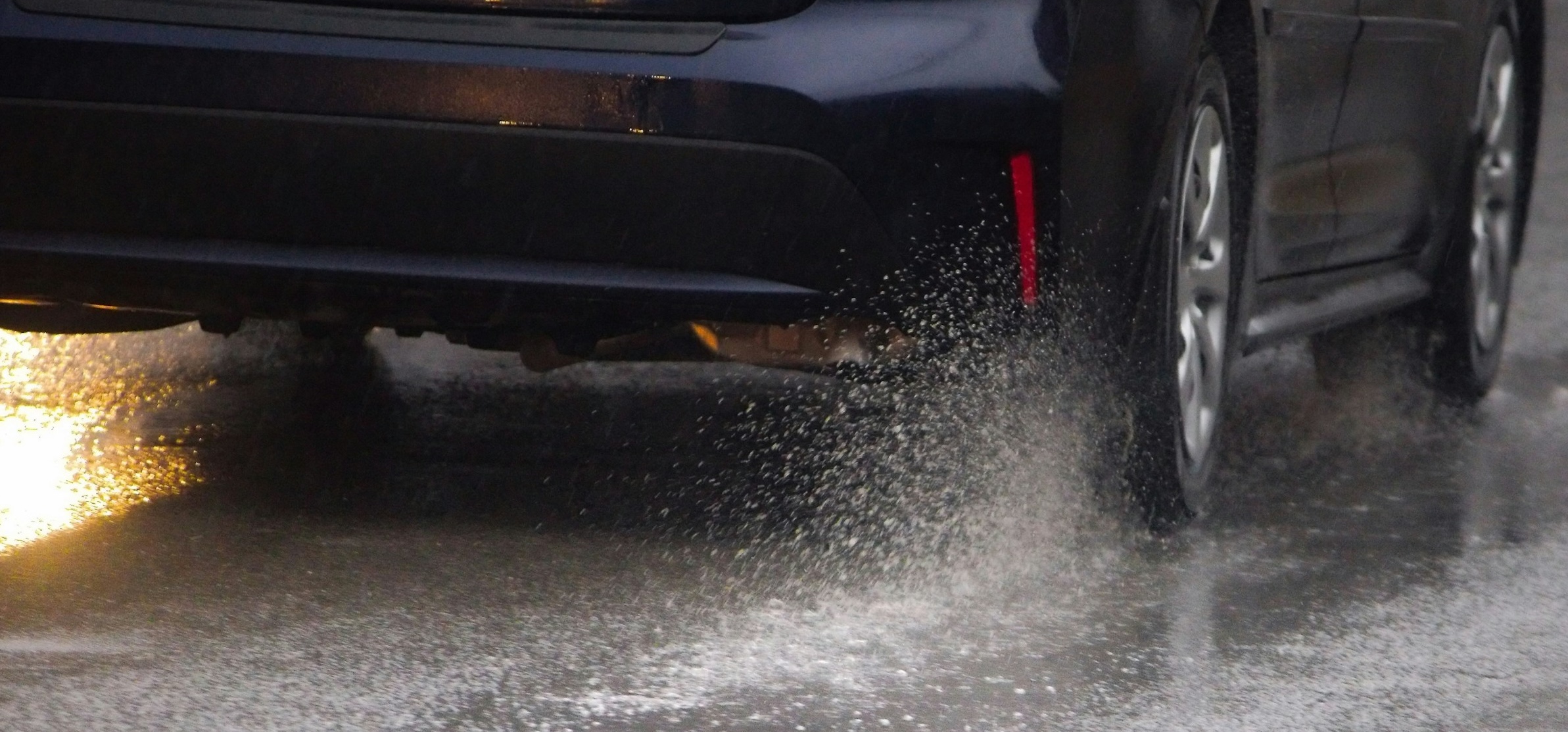
A new bill introduced to the Washington Legislature, now in session, would require tire manufacturers to reformulate the rubber in their tires to remove a chemical responsible for killing large numbers of coho salmon and other fish.
If approved, the legislation would give tire manufacturers nine years to find a suitable replacement for the compound 6PPD, a chemical additive used to extend the life of nearly every tire on the market today. The chemical readily combines with ozone to form 6PPD-quinone, a compound shown to be extremely toxic to coho with varying toxic effects on other salmon and trout species.
“All the work in salmon recovery in this state is stunted by this chemical,” said Rep. Zach Hall, D-Issaquah, who is sponsoring House Bill 2421. “This is definitely timely and urgent.”
Sen. Marko Liias, D-Everett, sponsor of a matching bill in the Senate, SB 6119, said the state’s $5 billion culvert-replacement program to free up salmon migration has been seriously hampered by damage from the dangerous tire chemical.
“Salmon are a foundational species for the entire ecosystem,” Liias said. “We have this one chemical, which in trace amounts has been shown to have devastating consequences to the environment. If we care about salmon, we must deal with this issue.”
The proposed law also includes a new fee of $3 or $6 on the sale of tires that contain 6PPD. The fee would be dropped for any particular brand of tire when the manufacturer certifies that 6PPD has been removed.
For decades, scientists understood that some unknown chemical was affecting coho salmon after the fish returned from the ocean and entered urban streams. Adult coho would swim in circles, gasp for oxygen at the surface and then keel over and die before they got a chance to spawn.
By 2020, following extensive scientific analysis, investigators had traced the problem to tire particles shed by vehicles on the road. They isolated the deadly compound, 6PPD-quinone — which is not really part of the rubber formulation. Rather, 6PPDQ is formed during a chemical reaction between 6PPD and ozone – a highly reactive agent that would otherwise degrade a tire rather quickly. (The discovery process is described in a 2020 article in the Encyclopedia of Puget Sound.)
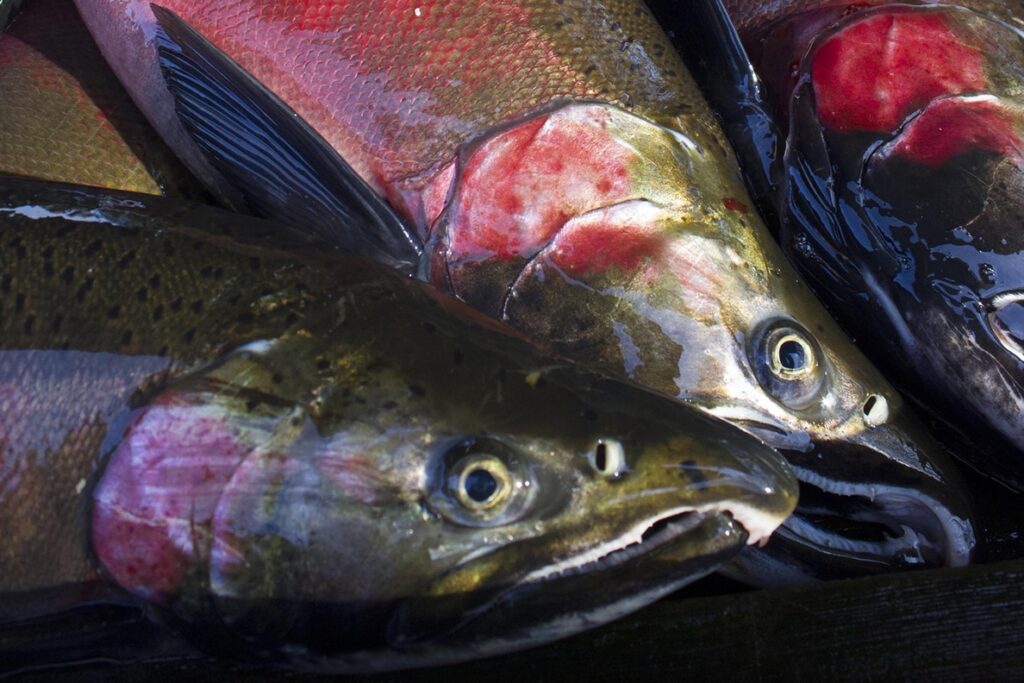
Since the discovery of 6PPDQ, deadly effects have been meaured for a multitude of aquatic organisms. Sublethal effects also are being explored, as these tire chemicals have been found in varying amounts in many animals, including humans. A recent study also raised alarms about the effects of 6PPDQ on young salmon, which may be dying in huge numbers even before they leave their home streams. (See last week’s blog post, Puget Sound Institute.)
The new legislation is designed to eliminate 6PPD as well as so-called “regrettable substitutes,” which could include chemicals that are different but not necessarily safer for salmon. Under the proposed law, the Washington Department of Ecology would be given authority to identify and block the use of such regrettable substitutes.
Meanwhile, Ecology continues to look for safer 6PPD substitutes under the 2019 Safer Products for Washington law. Sponsors of the new legislation say they don’t believe their proposed law would interfere with Ecology’s existing programs, including an effort to complete an “action plan” with recommendations by early next year.
Before banning or restricting a chemical under existing law, Ecology must find an alternative that is not only safer but also “feasible and available.” Hall says those requirements in the Safer Products law could be difficult to overcome. His legislation would put the onus on tire manufacturers to find a feasible alternative, which could include the invention of a new compound that is truly not yet “available.”
The nearly 10-year time frame to implement the ban on 6PPD would appear to be adequate, based on progress so far, said Hall, who is serving in his first legislative session. Some tire companies may move quicker, he said, but if the deadline proves impossible, the Legislature could change it before the time is up for alternatives to be put in place.
At least six companies are working to develop alternatives, some applying known chemicals and processes, others developing entirely new chemicals. There is wide agreement among regulators and tire companies that an acceptable anti-degradation chemical must not only protect tires from wear and be safer for the environment, it must also allow the tire to meet federal safety and performance standards.
Hall, who says he has had a lifelong interest in salmon, noted that most legislators seem to recognize the tire-chemical problem and the need for alternatives to 6PPD, but some are questioning the specific time frame for a ban.
Hall was appointed last summer to a vacant seat in the House after serving six years on the Issaquah City Council, where he represented the city on the regional Salmon Recovery Council for the Lake Washington/Cedar/Sammamish Watershed. He has been personally involved for years in the Issaquah Salmon Hatchery, where he served on the board of the “Friends” group that provides public activities and education.
Besides Washington, California is addressing the 6PPD problem under its Safer Consumer Products program, which requires manufacturers to propose alternatives. Alternatives identified early in the process are currently under evaluation. Others could be added later. The California law does not set a deadline for final regulatory action.
Asked for a comment on the Washington bill, the U.S. Tire Manufacturers Association stressed the importance of 6PPD to tire safety and pointed out that no substitute is currently available.
“Prematurely banning 6PPD without a viable replacement would jeopardize motorist safety,” according to a written statement from spokeswoman Kim Kleine. “USTMA is actively exploring alternatives and is conducting an Alternatives Analysis on behalf of a global consortium of tire manufacturers, in compliance with California regulations, to identify a suitable replacement for 6PPD.”
Sen. Liias said he expects to have the support of most tribes and environmental groups, but opposition could come from retail tire dealers as well as manufacturers, with the fee on new tires being one concern.
As drafted, the bill calls for a fee to be imposed on the retail seller of tires containing 6PPD. A $3 fee would apply to tires for most passenger vehicles, with a $6 fee on larger truck tires (rated above 2,500 pounds). The fee would not apply to original equipment on new vehicles. Described as an incentive for manufacturers to seek out an alternative, the fee would begin next January.
The collected revenue would go into a state account dedicated to administrative costs of the 6PPD program, including work on alternative chemicals, as well as monitoring and assessment of streams related to the effects of 6PPD on aquatic species. The bill also allows disbursement to an existing account that manages the cleanup of illegally dumped tires.
Opposition can be expected to the new tire fee, since another tire fee was just raised from $1 to $5 on Jan. 1 of this year. That fee goes to the management and cleanup of discarded tires.
Andrew Kenefick of Washington Trout Unlimited, who helped to draft the legislation, compared the bill to Washington’s Better Brakes Law, which greatly restricted the amount of copper used in automobile brake pads. Such copper is known to be toxic to salmon. Washington’s law and a similar law in California significantly reduced copper in salmon streams and became models for a nationwide agreement among the federal government, states and the automotive industry.
The law is generally considered successful, because the transition is expected to significantly reduce copper in the environment, and some brake manufacturers acted ahead of their legal deadlines.
“The regulation and ban (on 6PPD) should not be a surprise to the tire industry,” Kenefick said. “Regulatory discussions are taking place not only in the United States but also in Europe.”
Added Laurie Valeriano, executive director of the group Toxic Free Future, “”This bill creates a clear timeline to end the use of 6PPD in tires and avoid harmful substitutions, protecting salmon and the health of Washington communities.”
The House bill has been assigned to the Committee on Energy and Environment, where Hall expects a hearing within the next two weeks. The Senate bill has been assigned to the Environment, Energy & Technology Committee.
Excellent reporting.
Sound legislation.
Tire companies and tire servicers will support legislation because of consumer pressure, especially in the Pacific Northwest. No company wants to be tagged with “anti-salmon.”
BAN the chemical! We NEED salmon!